
Minimally Invasive Gynecologic Surgery
At Allina Health Women’s Health, our Minimally Invasive Gynecologic Surgery (MIGS) service provides advanced surgical care for patients with persistent pelvic pain and complex gynecologic conditions. Our highly skilled surgeons specialize in minimally invasive procedures that offer significant benefits over traditional open surgery, including shorter recovery times, less scarring, and increased comfort.
We know that the path to this moment has likely been difficult, painful, and even life-altering. Our compassionate, expert care helps you return to your life sooner and with greater comfort.
Learn more
Advanced minimally invasive techniques
MIGS stands for Minimally Invasive Gynecologic Surgery, and it uses a variety of minimally invasive procedures and tools to help correct, treat, heal, or cure a variety of complex gynecological conditions without the risks or recoveries involved with traditional open surgeries.
Our experienced MIGS specialists use state-of-the-art minimally invasive approaches, including the DaVinci5 robot, to provide optimal outcomes with reduced recovery times, minimized scarring, and improved patient comfort. These procedures include:
- Hysteroscopy: In this incisionless surgery, surgeons use a lighted camera to see inside your cervix and uterus to perform diagnostic and surgical procedures to help correct abnormal bleeding or remove adhesions (Asherman’s), fibroids, or polyps, among others.
- Laparoscopy: In this type of procedure, surgeons insert a camera through small incisions (usually in the abdominal area) to examine an area to either come to a diagnosis or use small instruments to treat your condition. Some of those conditions include adhesions, cysts, endometriosis, or fibroids. Some hysterectomies can be performed laparoscopically.
- Robotic Surgery: Surgeons use DaVinci 5 and DaVinci XI, some of the finest robotic technology available. Robotic surgery works much like a laparoscopic procedure, but with even more advanced controls, sharper visual abilities, and even less trauma to surrounding tissue.
- Vaginal Surgery: vNOTES (vaginal natural orifice transluminal endoscopic surgery) involves using specialized instruments through the vagina to avoid abdominal incisions for procedures such as removing cysts or fibroids; removing the uterus, ovaries, or fallopian tubes; permanent sterilization.
What Minimally Invasive Gynecological Surgery (MIGS) can treat
MIGS treats both straightforward and complex, advanced conditions. MIGS interventions include, but are not limited to:
- Complex gynecologic surgical history
- Endometriosis, all stages
- Fertility-sparing surgery
- Gender-affirming surgery
- Myomectomies (removing fibroids)
- Other complex gynecologic surgical conditions requiring specialized expertise
Benefits of MIGS procedures
Minimally invasive techniques have revolutionized diagnosis, treatment, and recovery of many painful and complex gynecological conditions. Benefits of minimally invasive approaches include:
- Shorter hospital stays: In most cases, patients go home the same day.
- Reduced post-operative pain: Fewer incisions and less trauma mean less pain on the path to healing.
- Reduced risk of bleeding or infection, both during and after surgery.
- Minimized scarring: Fewer to no incisions means fewer to no lasting scars.
- Faster recovery times: Traditional open surgeries often entail weeks-long recoveries. Many MIGS procedures are just a few days to short weeks.
- Preservation of fertility when appropriate: MIGS can help preserve or improve pregnancy outcomes for those still creating a family.
- Comprehensive pre- and post-operative care: Surgeries and recovery times are shorter, but our care is comprehensive. We are here with you, and for you, every step of the way.
Why choose Allina Health for MIGS
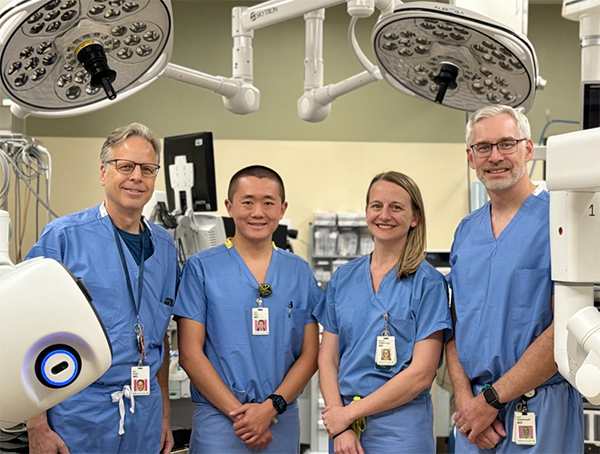
Our highly trained, intensely vetted team is focused on improving difficult and complex gynecological conditions with state-of-the-art, evidence-based, minimally invasive techniques.
What to expect with a MIGS surgery
You may get a referral from your primary care provider, or an ob/gyn provider. You may also call for a consultation.
At your consult, we’ll review your surgical needs and discuss the best treatment options. You’ll also have a pre-op visit prior to your surgery.
By definition, we take a minimally invasive approach to your condition. We coordinate care with other disciplines as needed, and we optimize your health prior to surgery for the most successful outcome possible.
Hysteroscopy can be done in the office or the operating room with sedation, but not typically general anesthesia. Other surgeries will require general anesthesia.
Most patients enjoy a shorter surgery duration and go home the same day. Recovery time is typically much shorter than traditional open surgery, putting you back on the path to normalcy quickly. You’ll also have a post-operative follow-up appointment between two and six weeks after the procedure.
Reviewed by: Dr. Brent Dumermuth
First published: 11/11/2025