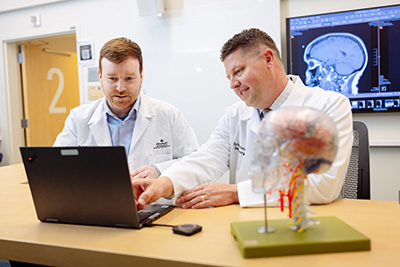
Laser interstitial thermal therapy (LITT)
Laser interstitial thermal therapy (LITT) – also known as laser ablation – is a minimally invasive brain surgery used to treat select brain tumors, epilepsy, and other neurological conditions.
At Allina Health, our expert neurosurgeons use advanced imaging and precise laser energy to target deep or hard-to-reach brain tissue through a very small opening, often leading to shorter hospital stays, less disruption to healthy tissue, and faster recovery than traditional brain surgery.
Learn more
What is laser interstitial thermal therapy?
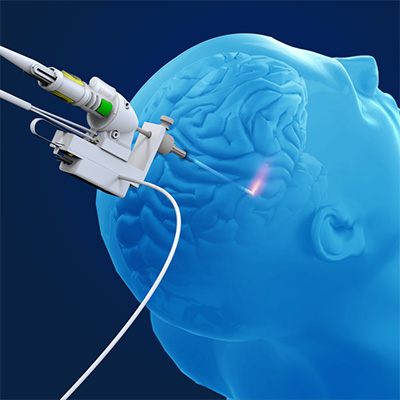
LITT is an MRI-guided procedure that uses a high-intensity laser probe to deliver thermal energy directly to a targeted area in the brain. During the treatment, a neurosurgeon inserts a thin laser probe through a small opening in the skill and uses real-time MRI imaging to monitor treatment as it happens. The laser targets abnormal brain tissue precisely with controlled heat.
Laser interstitial thermal therapy may be used for select conditions, including certain brain tumors, seizure-related conditions (such as epilepsy), radiation-related tissue changes and other targeted brain lesions. Whether LITT is right for you depends on your diagnosis, imaging results, anatomy and overall treatment goals.
What types of conditions are treated with LITT laser ablation?
Our neurosurgery team utilizes LITT to treat a variety of complex neurological conditions, including:
- Brain tumors: including gliomas, glioblastomas and metastatic brain tumors.
- Seizure-related disorders and epilepsy: specifically targeting the focal point of seizures such as mesial temporal sclerosis.
- Radiation necrosis: treating tissue inflammation that can occur after previous radiation therapy.
What are the benefits of LITT over traditional surgery?
For appropriately selected patients, laser interstitial thermal therapy may offer several advantages over traditional open brain surgery, including:
- Smaller incision
- Precise targeting: MRI-guided precision to target abnormal brain tissue
- Focused treatment: designed to preserve surrounding healthy brain tissue
- Reduced pain
- Shorter hospital stays
- Faster recovery potential: many patients return home within shorter periods
- Better access: treats areas of the brain that were previously considered inoperable
Your care team will review expected benefits, risks and alternatives as part of the decision-making process.
What to expect
Before laser interstitial thermal therapy (LITT), your care team completes a pre‑surgical evaluation to plan your treatment and help ensure your safety. This typically includes a full health assessment and imaging to closely review the brain lesion and surrounding tissue. Your doctor will also provide specific instructions to help you prepare, such as whether you need to adjust medications or avoid eating or drinking before the procedure. LITT is performed in a specialized surgical setting that allows continuous MRI monitoring throughout the procedure. Most LITT procedures are done under general anesthesia, meaning patients are asleep for the procedure and do not feel or remember it.
Using advanced imaging, the surgeon maps a precise path to the area for treatment. A thin laser catheter is then carefully guided to the treatment area using real-time MRI guidance, where controlled heat is applied to the targeted tissue. The procedure typically involves a small incision rather than a large surgical opening.
After the procedure, many patients stay in the hospital overnight for observation, though recovery time and experiences vary based on individual factors. Compared with open brain surgery, post‑operative pain is usually mild to moderate and may include headache or scalp soreness near the small incision. Your care team will provide detailed guidance on follow-up care, activity restrictions, and next steps.
Why choose Allina Health for LITT?
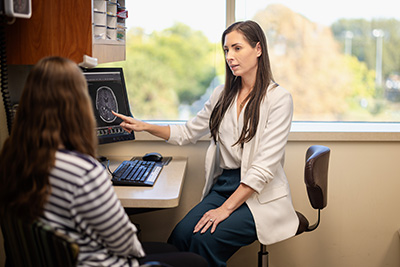
At Allina Health, LITT is offered as part of a team-based, patient-centered approach to advanced neurosurgical care. Each patient is evaluated by an experienced, multidisciplinary team to determine whether LITT is an appropriate option and how it fits into a personalized treatment plan.
Our neurosurgical teams focus on:
- Advanced, minimally invasive treatment options when appropriate
- Careful patient selection and surgical planning
- Coordinated care before, during, and after treatment
- Clear consultation and referral pathways